
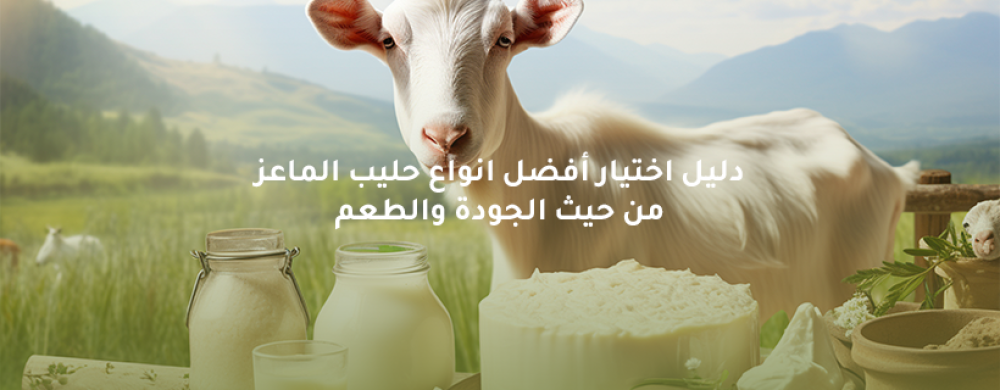
With the wide variety of dairy products on the market, choosing the right milk now depends on more than just taste or price. There are differences between types of goat's milk in terms of production methods, fat content, ingredients, and storage quality, making it essential to understand these differences to find the product best suited to your needs.
Goat's milk is distinguished by its unique taste and rich texture, and is used for drinking directly or in preparing many recipes such as cheese, desserts, and beverages. However, the quality of milk is not solely determined by the brand name, but also depends on its source, processing methods, and adherence to safety standards.
When choosing goat's milk, it is advisable to pay attention to several key factors, including:
- Choosing pasteurized milk ensures better safety for consumption.
- Review the ingredients and make sure the source of the milk is clear.
- Comparing the percentage of fat and protein between products.
- Check the integrity of the packaging and the expiry date.
- Choose the appropriate fat content according to the method of use.
- Try more than one product to find the type that suits your taste.
What is the best type of goat's milk?
There is no single type that can be considered the best for everyone, because the choice depends on the purpose of use, whether it is for daily drinking, preparing recipes, or obtaining a richer texture and taste.
Some of the most popular options include:
Pasteurized goat's milk for daily drinking
Pasteurized milk is a suitable option for everyday use, as pasteurization helps to reduce the presence of harmful microorganisms while preserving the nutritional properties of the milk.
full-fat goat's milk
It is suitable for people who prefer a creamy texture and rich taste, and it usually contains a higher percentage of fat, which gives it a more pronounced taste compared to low-fat varieties.
low-fat goat's milk
It may be suitable for those who wish to reduce their fat or calorie intake, but it is always best to check the nutrition label to find out the actual values for each product.
long-life goat's milk
It provides a practical option for those who need to store the package for a longer period before opening it, while adhering to the storage instructions on the package.
When comparing different types of goat milk , do not rely solely on the breed name, but look at the fat and protein content and the method of production, as these factors directly affect the taste and texture.
Does goat's milk treat allergies?
Goat's milk is not a cure for allergies, nor is it a guaranteed alternative for those who suffer from cow's milk protein allergy.
Milk allergy occurs due to the immune system's reaction to certain proteins, and these proteins may be similar between cow's milk and goat's milk, so some people may experience the same symptoms when consuming goat's milk.
It is also important to differentiate between milk allergy and lactose intolerance; allergy is related to proteins, while lactose intolerance is related to difficulty digesting milk sugar.
Therefore, if symptoms such as skin rash, vomiting, swelling or difficulty breathing appear after consuming milk, it is best to consult a doctor and not try different types randomly.
Which type of goat produces the best-tasting milk?
The taste of goat's milk varies depending on the breed, type of feed, milking method, storage and quality of production, so there is no single type that suits everyone.
Some of the most famous breeds are:
Nubian goats
It is often characterized by a higher fat content, which gives the milk a thicker texture and a richer taste, so some prefer it when looking for milk suitable for making cheese or products that need a creamy texture.
Saanen goats
This breed is known for producing large quantities of milk, and is one of the breeds widely used in dairy production.
Nigerian dwarf goats
Its milk is characterized by a high fat content compared to some other breeds, making it suitable for those looking for a rich taste and clear texture.
But when buying milk from markets, breed information may not always be available, so factors such as source quality, pasteurization, storage and fat content become more important when choosing the product.
Goat's milk for infants
A distinction must be made between regular goat's milk and infant formulas made from goat's milk, as they are not the same product.
Regular goat's milk is not a substitute for breast milk or infant formula, and its use as a primary food for infants is not recommended without medical guidance.
Infant formulas made from goat's milk are products specifically manufactured to meet the child's nutritional needs, and should be chosen according to age and the doctor's instructions.
When considering using a type of goat's milk for babies, you should pay attention to:
- Make sure the product is intended for infants and not regular milk.
- Review the appropriate age for use.
- Adhere to the preparation method written on the package.
- Consult a doctor if you have allergies or digestive problems.
- Do not use raw milk for babies.
How to choose the right goat's milk?
To make the right choice, focus on a number of points:
- The quality of the milk source.
- Clarity of components.
- Fat and protein ratio.
- Method of preservation.
- Expiry date.
- The purpose of use.
- The taste and texture are tailored to your preferences.
The type that is best for everyday drinking may be different from the type that is suitable for cheese making or preparing recipes.
Summary
Choosing the best type of goat milk depends on your personal needs and how you use the milk; there is no single product that suits everyone.
Make sure to choose pasteurized milk from a reputable source, and check the ingredients and nutritional information before buying. Whether you're looking for a rich taste, creamy texture, or a product suitable for everyday use, comparing the available options will help you find the right milk for you.
Discover the available types of goat milk and choose the product that combines quality and taste suitable for your daily needs.