
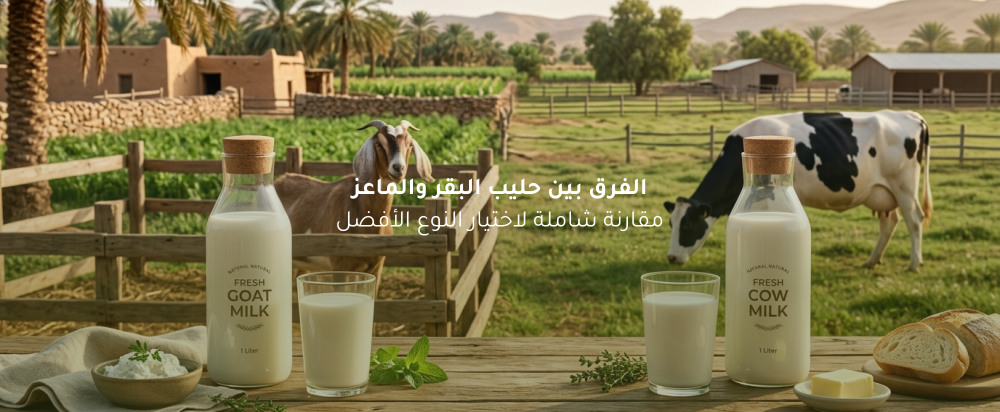
Milk is a staple in many diets, but the wide variety of options available leaves some wondering which type is best for everyday use. The difference between cow's milk and goat's milk is one of the most frequently considered comparisons by consumers when looking for nutritional value, taste, fat content, digestibility, and other uses.
No single type can be identified as the best for everyone, as the choice depends on several factors such as nutritional needs, tolerance to dairy products, method of use, and taste preference.
The difference between cow's milk and goat's milk is that both types contain important nutrients such as protein, fat, carbohydrates, calcium and minerals, but there are differences in composition that affect texture, flavor and some nutritional properties.
When comparing the two types, the following should be considered:
- Protein content.
- Fat percentage.
- Calories.
- Amount of lactose.
- Method of processing and pasteurization.
- Taste and texture.
- Purpose of use.
- A person's ability to tolerate milk.
Pasteurized milk should also be chosen, whether from cows or goats, because raw milk may contain pathogens, while pasteurization helps to reduce risks while preserving nutritional value.
What is goat's milk? And what are its main benefits?
Goat's milk is the milk produced from dairy goats, and is used as a beverage or in the manufacture of cheese, yogurt, sweets and baked goods.
The difference between cow's and goat's milk is evident in some characteristics related to fat and protein composition, but that does not mean that one type is always better.
Among the most important characteristics of goat's milk:
Source of protein
Goat's milk contains protein which contributes to providing the amino acids that the body needs as part of a daily diet.
The amount of protein varies depending on the product and serving size, so it is recommended to read the nutrition label for each package.
It contains fats and energy
Whole milk provides fats that affect texture and taste, and also gives the body some energy.
The fat content of goat milk products varies depending on the breed and method of production, so not all products can be judged in the same way.
Contains lactose
Like cow's milk, goat's milk contains lactose, so it is not considered a lactose-free option for people with lactose intolerance.
Its taste is different
Goat's milk has a different flavor than cow's milk, and some people may prefer it because of its taste and texture.
Taste is affected by factors such as:
- Breed type.
- Animal nutrition.
- Production method.
- Storage.
Its uses are multiple
It can be used in:
- Direct drinking.
- Cheese making.
- Preparing yogurt.
- Baked goods.
- Sweets.
- Some homemade recipes.
Cow's milk and its most important nutritional benefits
Cow's milk is one of the most common types of milk, and it is available in multiple forms such as whole, low-fat, skimmed, and lactose-free.
Among its most important features:
Source of protein
Cow's milk provides a good amount of protein, making it a popular part of breakfasts and everyday meals.
Multiple fat options
The appropriate type can be chosen according to need:
- Full-fat for those who need higher calories.
- Low fat to control fat.
- Fat-free for those who wish to reduce calories.
Easily available
One of the most important advantages of cow's milk is the wide variety of products and brands, which makes comparing prices and nutritional values easier.
It is used in many products
Used in the manufacture of:
- Cheese.
- Yogurt.
- Butter.
- Cream.
- Sweets.
- Drinks.
The widespread availability of cow's milk does not mean it is suitable for everyone. People with milk protein allergies or lactose intolerance need to choose products appropriate for their condition.
The difference between cow's milk and goat's milk
The difference between cow's milk and goat's milk can be understood through several aspects:
In terms of taste
Cow's milk has the most common and familiar taste for most people, while goat's milk has a different flavor that some may prefer.
In terms of consistency
Goat's milk may seem thicker to some people due to the different composition of fats and proteins, but the experience varies depending on the product.
In terms of fats
Both types contain fat, but the percentage varies depending on the type of milk and the manufacturing method.
Goat's milk also contains a higher percentage of small fat globules compared to cow's milk, which is one of the points that distinguishes its composition.
In terms of protein
Both contain milk proteins, with differences in composition and the way curds form during digestion.
But that doesn't mean goat's milk is easier for everyone to digest.
In terms of lactose
Both types contain lactose, so switching from cow's milk to goat's milk is not a guaranteed solution for those with lactose intolerance.
In terms of sensitivity
Goat's milk is not a therapeutic alternative for those suffering from cow's milk protein allergy, because some proteins may be similar between the two types.
In terms of calories
Calories are mainly based on fat content, so products with similar fat content should be compared to get a fair comparison.
Which is better: cow's milk or goat's milk?
There is no one-size-fits-all answer; what is best depends on the individual's needs.
Goat's milk can be chosen if:
- You preferred its taste.
- You will find a high-quality product that suits you.
- She wants to try a different type of dairy product.
Cow's milk may be suitable if:
- Prefer its usual taste.
- You need multiple fat options.
- Looking for a product that is readily available.
The most important thing when choosing is:
- Read the ingredients.
- Comparing nutritional values.
- Choose pasteurized product.
- Make sure it is suitable for your health condition.
Is goat's milk easier to digest than cow's milk?
Some people believe that goat's milk is easier to digest, but it's not that simple.
There are differences in the composition of fats and proteins between the two types, and these differences may affect the way they are digested, but there is no rule that applies to everyone.
Ease of digestion depends on:
- The body's ability to digest lactose.
- The amount of milk consumed.
- The health status of the digestive system.
- Product type.
Therefore, one person may feel more comfortable with goat's milk, while another person may not notice any difference.
The finest types of goat's milk
When searching for the finest goat's milk, the focus should be on the quality of the product, not just the name.
Among the most important criteria:
- The milk must be pasteurized.
- Clarity of the product's source.
- Packaging safety.
- Expiry date.
- Fat and protein ratio.
- Storage method.
The characteristics of goat's milk also vary according to the breed. Some breeds produce milk with a higher fat content, while others are characterized by producing a larger quantity of milk.
But lineage is not the only factor; other factors also play a role:
- Nutrition.
- Upbringing conditions.
- The milking method.
- Treatment.
How do you choose the right milk for you?
Before buying milk, ask yourself:
- Do I prefer taste or just nutritional value?
- Do I need to reduce my fat intake?
- Do I have a problem with lactose?
- Should I use it for drinking or for cooking?
- Is the product suitable for my daily use?
Based on the answer, you can choose the type that suits your needs.
Summary
The difference between cow's and goat's milk is evident in taste, fat and protein composition, method of use, and some nutritional properties, but this does not mean that one is better for all people.
Goat's milk has a different taste and a special composition, while cow's milk is characterized by its easy availability and the variety of its products.
Therefore, the right choice depends on your nutritional needs, your ability to tolerate milk, and how you use it.
Learn the difference between cow's and goat's milk and choose the type that suits your diet in terms of quality, taste and nutritional value.